News and Insights
Our latest News


How AMRs and AGVs Are Redefining How We Work
From self-serve scanners and AI bots to self-driving vehicles and content generation, technology is infiltrating the way we work across every industry.
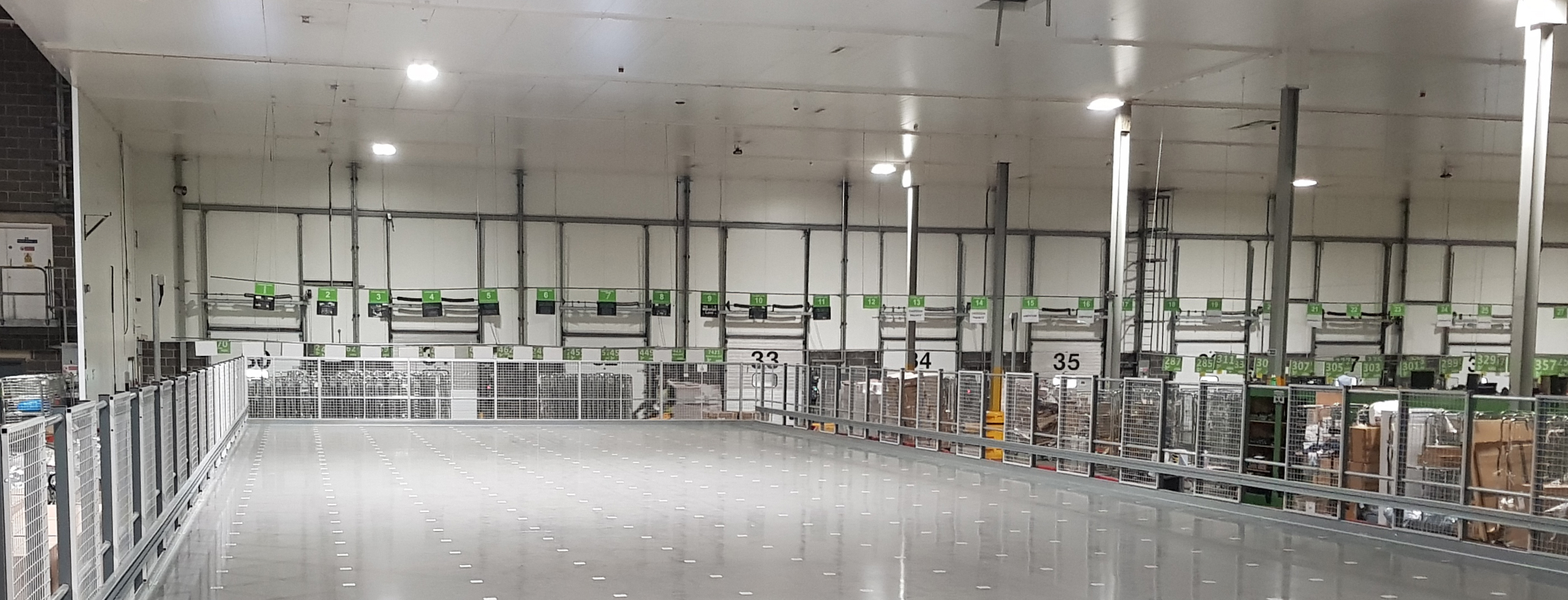
For warehouses, manufacturers, and retailers with high volumes and pressure to increase throughput, there’s no doubt that the only way to meet demand is through the integration of Autonomous Mobile Robots (AMRs) and Automated Guided Vehicles (AGVs). These technologies are no longer experimental; they are becoming foundational to modern warehouse operations. For decision-makers planning future growth, understanding how AMRs and AGVs are redefining workplaces (and how to prepare your facilities for them) is critical.
In this article, we highlight how AMRs and AGVs are transforming every aspect of business to help reduce costs, streamline processes, increase safety, and prepare you for a new way of working.
An Introduction to AMRs and AGVs
AMRs and AGVs are both mobile robotic systems designed to transport goods within a warehouse or production environment. Their purpose is to increase efficiency, improve accuracy, and make operational savings through human/robot collaboration. While they serve similar purposes, the way they operate differs significantly.
AGVs
- The original autonomous robot designed to follow fixed, preset routes.
- Self-navigate routes via wires, magnets, or lasers
- Ideal for repetitive tasks and workflows such as goods transfers or storage.
- Generally, less expensive, reliable and easier to maintain.
AMRs
- Advanced autonomous systems more adaptable to new processes and routes.
- Dynamic self-navigation via comprehensive sensors, cameras and software.
- Interpret maps of their environment to avoid obstacles and reroute in real-time.
- Relies on sophisticated software systems and advanced maintenance upkeep.
Market Predictions: A Clear Signal to Invest
The global market for mobile robotics in warehousing continues to expand rapidly, with industry forecasts clearly supporting that claim:
- 2024 saw a 25% global increase in the deployment of AGV and AMR units
- The AGV-AMR market is projected to reach USD 6.78 billion by 2035
- E-commerce growth, labour shortages, and demand for 24/7 operations are primary drivers
For large, high-end facilities, this growth signals more than a technology trend. It indicates a structural shift in how facilities are designed and operations are planned.
Facilities built purely for manual handling will increasingly face constraints from their sectors. Those designed with automation-readiness in mind will scale more efficiently, attract investment, and offer operational flexibility.
How AMRs & AGVs Are Redefining Working Environments
AMRs and AGVs are not simply automation tools; they are strategic solutions to long-standing operational challenges and possibilities. Below, we explore how autonomous robotics is directly solving problems and permanently changing processes.
Where They Add Value
- They run fixed pallet routes between goods-in, storage, and despatch without disruption
- Respond to pick completion signals, automatically moving orders to packing stations
- Increase productivity and daily throughput in high-volume e-commerce fulfilment centres
- Improve safety by securely lifting, lowering, and handling heavy loads
- Keep stock levels updated and replenished, allowing operations to scale capacity
Heavier Load & Tow Capacity
- AMRs are suited to totes, cartons, and light-to-medium pallets, carrying and transferring loads up to 3,300lbs
- There are light-duty and heavy-duty towing AMR models that can tow between 1,000 and 10,000lbs
- AGVs are capable of moving extremely heavy loads and high volumes, carrying and transferring loads up to 11,000lbs
- Heavy-duty AGV towing capacity can exceed 100,000lbs, making them ideal for high-demand operations
Instant Data Sharing
- They connect to live order systems for picking and packing automation
- Scanners and sensors report stock levels and update inventory in real-time
- Integrated AI systems help AGVs learn, evolve and scale with business needs
- Provide instant and accurate reporting on productivity, KPIs, and potential issues
Enabling 24/7 Operations
- More resources to meet customer expectations, modern demands, and tighter KPIs
- Extend operational times without an increase in labour costs
- Replenish stock levels outside of peak operational times for minimal disruption
- Increase processing times and help reduce pressure during peak seasons
- Allows businesses to stay ahead of competitors in delivery and service levels
Increased Safety Levels
- Reduce forklift traffic and accidents
- Minimise manual handling accidents
- Lower collision risks with sensors and speed restrictions
- Set routes for robots and clear, safe pathways for humans
- 360° obstacle detection for real-time reactions and automatic stop functions
Human-Robot Collaboration
- Assists with good-to-person workflows
- Reducing human handling errors
- More accurate and faster stocktaking
- Supports teams during peak seasonal pressures
- Reduces the strain on labour shortages
Download our guide to AMR/AGV Mezzanine Floors
What Does the Future Hold?
Automation not only resolves previous bottlenecks but also creates new opportunities to accelerate and strengthen growth. AMRs and AGVs are not replacing key skills or machinery, but they are reshaping operational models – making them more efficient, cost-effective, and built for a technology-based future.
The competitive advantage lies not just in adopting automation, but in designing a structure that allows it to perform at its full potential, granting businesses several clear benefits:
- Migrate from reactive to predictive, real-time workflows
- Design operations around workflow rather than labour availability
- Align physical infrastructure and human skills with digital systems
- Build long-term resilience and an infrastructure to scale upon
When infrastructure, layout, and storage systems are engineered to support robotic movement, the gains compound over time, making this shift a positive and obvious change in the way we work. Stay ahead of the curve and read our article on The Future of Warehouse Automation.
Planning Your Facility for Automation
Investing in AMRs or AGVs is not just about purchasing the machinery and installing the software. It is about preparing your existing infrastructure to support these changes. Key considerations include:
- Floor load capacity
- Clear internal heights
- Rack alignment and aisle widths
- Charging and power supply points
- Data connectivity
- Future scalability
Automation readiness should be considered at every point in your facility and at every stage of operation. Early consideration of incorporating AMRs and AGVs will support seamless expansion, reducing costly disruption or downtime when making these additions further down the line.
How Bradfields Supports AMR & AGV Integration
At Bradfields, we have already worked with numerous businesses to optimise their existing facilities to leverage the benefits of AMRs and AGVs. Along with expert design and compliant installation, we also provide a wide range of other services:
- High-precision racking solutions compatible with robotics
- Mezzanine floors engineered for structural integrity
- Layout optimisation for robotic traffic, machinery, and humans
- Scalable storage systems designed with automation in mind
- Safety measures are considered an integral part of operations
Our extensive experience with expanding operations enables us to anticipate the incoming requirements that AMRs and AGVs demand, and we’re on hand to share our advice.
If you’re planning expansion, refurbishment or new-build facilities, preparing for robotic-first operations today ensures you are ready for tomorrow.
Elevate Your Space with Bradfields
As specialists in high-quality mezzanine and fit-out solutions, we offer a full turnkey service for bespoke storage solutions. Whether you’re optimising industrial, commercial, or retail space, we can support you through the entire process to level up your operations.