The Hidden Costs of Not Expanding Your Warehouse Space
Discover the real impact of warehouse space problems.
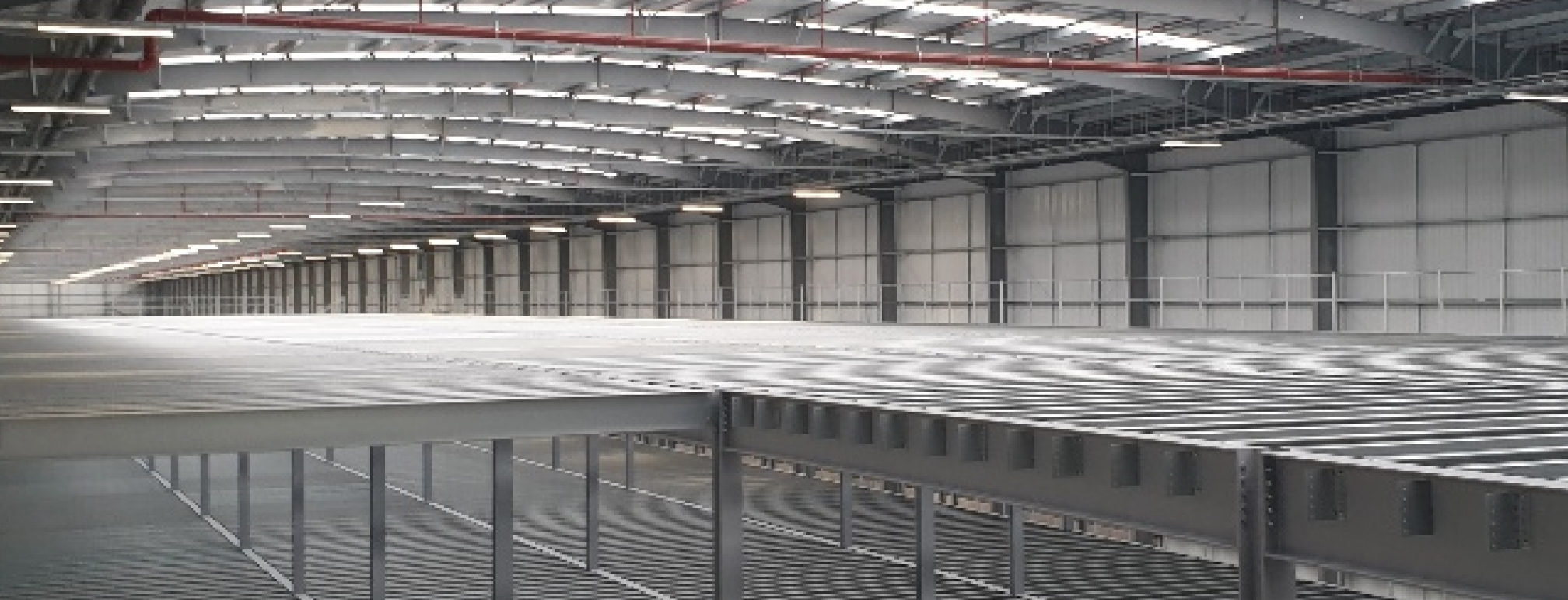
As businesses grow, warehouse space is often one of the first areas to come under pressure. At first, it might seem manageable. Over time, tighter aisles, fuller racking, and longer picking routes add up and impact productivity, targets, customer satisfaction and colleague morale.
Understanding warehouse inefficiency costs helps you recognise when space constraints shift from operational challenges to commercial risks. More importantly, what you can do to reduce the impact. In this article, we highlight the hidden costs of not expanding your warehouse space and the commercial possibilities when you do.
The True Cost of Warehouse Inefficiency
The longer warehouse space challenges persist, the more difficult and costly they become to resolve. The first step is recognising these challenges and the tipping point, so action can be taken before it’s too late.
Longer Handling Times
One of the biggest problems with outgrowing your space is longer picking routes. This is often because your warehouse layout is not optimised for new products. High-demand SKUs are not positioned in convenient locations, forcing staff or machines to travel farther, increasing time and labour per order. Multiply this by thousands of orders, and the impact becomes substantial. It also increases the risk of damage and errors due to unnecessary handling.
Reconfiguring your floor plan and optimising unused vertical space creates more opportunities for quick, safe, and logical workflows.
Staffing Pressures and Morale
Congested work environments can lead to frustration among staff, particularly when tasks become more physically demanding. Not to mention the pressure of meeting existing KPIs when product locations have doubled in distance. Inefficient warehouse layouts and storage can also create safety concerns, with increased traffic (people and equipment) in tighter spaces.
If not managed correctly, this additional pressure can lead to higher staff turnover, increased training costs, and reduced morale. All of which can impact productivity, customer satisfaction, and costs.
Workflow Performance and Bottlenecks
Teams can only work as efficiently as the equipment and processes they are provided with. Disorganised layouts and storage can demotivate your staff, leading to increased damage when handling products, picking errors, returned orders, and customer complaints. Stock visibility may also suffer, making it harder to conduct a full inventory or provide accurate availability information.
Incorporating shelving, racking, and chutes can help organise stock and provide clear routes for picking and packing. This not only improves safety but also speeds up performance by removing previous barriers.
Reduced Customer Satisfaction
This could be considered one of the most critical costs of poorly performing warehouse layouts. Longer process times and delayed picking and packing can lead to slower order fulfilment and increased frustration for your customers. For businesses operating in competitive markets, these issues can quickly translate into lost customers, bad reviews, and damaged reputation. What begins as an internal operational challenge suddenly becomes a bigger, customer-facing problem to manage. By solving internal space issues, you can avoid wider problems.
Missed Growth Opportunities
Whether you’re looking to expand your product line, hire more staff, or introduce AMRs, limited space also restricts your next steps. This means that businesses have to delay taking on new contracts or investments simply because they lack the capacity or flexibility to support them. While your competitors grab the latest trend, you’re left behind, not due to lack of demand, but lack of space. Over time, this can have a significant impact on revenue and brand potential.
By transforming unused vertical space into a mezzanine floor, you can elevate your business without relying on external locations or support.
How A Mezzanine Floor Can Address Space Problems
Individually, these warehouse capacity issues may seem manageable. But together, they create a compounding effect. If you’re serious about growth, you need to be aware of these constraints and how to resolve them.
At Bradfields, we help businesses see the bigger picture with mezzanine floor installations and storage structures customised to your space and requirements.
What Our Process Includes
- Reviewing existing warehouse inefficiencies and hidden costs
- A clear understanding of how the space needs to be used
- Detailed assessment of layout, storage and workflows
- Incorporating appropriate racking, shelving, office space and safety measures
- Planning for existing requirements and future growth
Recognising When Space Limitations Become a Risk
There are several indicators that warehouse capacity issues are becoming a costly inconvenience:
- Consistent congestion in key operational areas
- Increased picking and handling times
- Rising labour costs without corresponding output gains
- Frequent stock challenges
- Growing reliance on temporary storage solutions
- Delays in fulfilling customer orders
- Rising returns and customer dissatisfaction
If you are running out of warehouse space and storage, don’t hesitate to reach out to Bradfields. Our experts can help you overcome these challenges and transform your space for long-term, profitable growth.
Elevate Your Space with Bradfields
As specialists in high-quality mezzanine and fit-out solutions, we offer a full turnkey service for bespoke storage solutions. Whether you’re optimising industrial, commercial, or retail space, we can support you through the entire process to level up your operations.
What to Expect When Planning a Mezzanine Project
What’s involved in a mezzanine project and how to ensure a smooth installation.
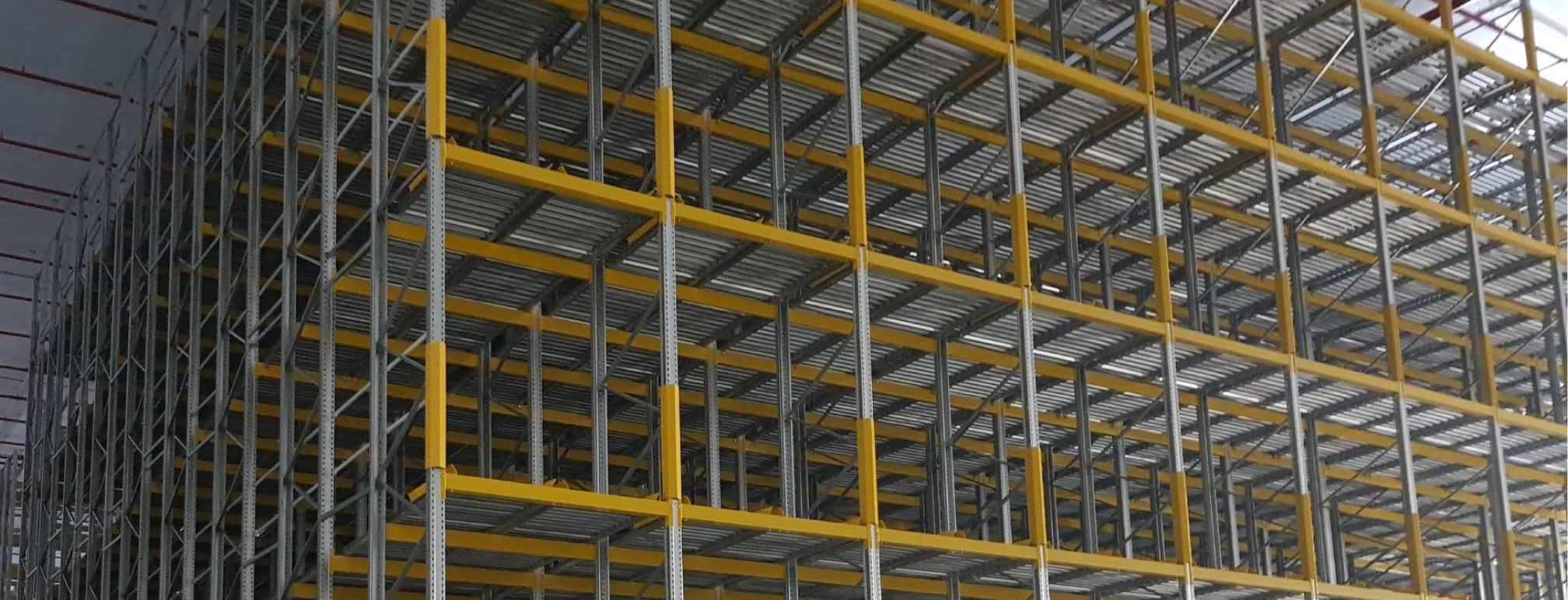
Planning a mezzanine project is an effective way to maximise your existing warehouse or shop floor without the need for relocation or expansion. However, a successful mezzanine installation involves far more than simply adding an extra level.
Whether you’re transforming a warehouse, distribution centre, showroom or shop floor, every stage of a mezzanine project plays a crucial role in ensuring your structure meets operational and regulatory requirements. In this article, we outline what to expect when planning a mezzanine project to ensure a smooth installation from start to finish.
Steps Involved in Planning a Commercial Mezzanine Project
Initial Assessment
The first step in a mezzanine project of any size is understanding whether your space is suitable. This typically involves a site survey to assess the building’s dimensions, layout, restrictions, and existing infrastructure. A site assessment helps define the scope of your project and identify any constraints early on.
Key factors considered at this stage include:
- Available floor space and ceiling height
- Existing structural capacity and restrictions
- Access points and workflow requirements
- Fire safety considerations and building regulations
Defining Requirements
Alongside the site assessment, it’s important to clearly outline how you want the mezzanine floor and space to be used. Different applications, such as shelving, racking, or office spaces, will influence the design, load capacity, and access points.
At this stage, you should consider:
- Intended use of mezzanine (current and future use)
- Load-bearing requirements (people, products and machinery)
- Access solutions (stairs, lifts and pallet gates)
- Integration with existing storage and processing systems
Mezzanine Design and Planning
Only when all measurements and requirements are confirmed should the design phase begin. This is where concepts are translated into detailed plans that consider functionality, compliance, and future-proofing. A well-executed space design helps clients visualise their mezzanine in situ and highlights any concerns early on, reducing the risk of costly changes later.
During this phase, we provide:
- Detailed blueprint drawings and structural calculations
- CAD design and 3D modelling to replicate a real-life installation
- Positioning of lighting, ventilation, utilities and access points
- Fire protection measures and safety barrier positioning
- Collaboration with building control and regulations
Quotation and Project Scope
An accurate design helps provide a detailed and realistic quotation. This should provide a clear outline of all aspects involved, as well as providing transparency around costs and timelines. It’s important to review the quote and scope carefully to ensure everything is as expected and accounted for.
Project scopes and quotes tend to include:
- Materials and manufacturing prices
- Installation timeline and labour costs
- Compliance measures and safety features
- Project timelines and key milestones
Fabrication and Preparation
Once the design and quote are agreed and signed off, manufacturing can begin. Each piece of your mezzanine structure, from stairs and flooring to racking, chutes, and even interior design, is fabricated with precision and attention to detail, ensuring full compliance and quality for a smooth installation
Site preparation will also begin, which covers:
- Clearing and organising installation area
- Coordinating with contractors and departments
- Confirming access and delivery logistics
- Final approvals from building control and landlords
- Communications with key personnel to ensure minimal disruption
Mezzanine Installation
A professional mezzanine installation team will be on hand to efficiently assemble your bespoke mezzanine structure. Fully aware of the design and layout, they will deliver a smooth, swift installation, maintaining safety and compliance while causing minimal disturbance to your site. The length of this phase is dependent on the size and complexity of your project, but often includes:
- Delivery of materials and components
- Structured build sequence to minimise disruption
- Ongoing communications and progress updates
- Adherence to health and safety standards
Final Inspection and Handover
Once built, the project moves into its final stage. This involves multiple inspections of the structure to ensure its integrity, functionality, safety and compliance. Once all standards are met, the mezzanine can be signed off and prepared for operational use.
- Final quality checks and safety inspections
- Thorough testing of electrics or machinery
- Certification and compliance documentation
- Client walkthrough and handover
How to Ensure a Smooth Mezzanine Project
A mezzanine project is a significant investment. It’s important to know what’s involved at every stage; not just to prepare yourself for what’s to come, but so you know what should be included at every stage. With the right planning and guidance, you can avoid mistakes and create a straightforward process.
If you’re considering a retail, office or multi-tier mezzanine project, starting with a clear plan and the right expertise can make all the difference.
Elevate Your Space with Bradfields
As specialists in high-quality mezzanine and fit-out solutions, we offer a full turnkey service for bespoke storage solutions. Whether you’re optimising industrial, commercial, or retail space, we can support you through the entire process to level up your operations.
Understanding Mezzanine Floor Costs & Quotes
Breaking Down the Cost of a Mezzanine Floor.
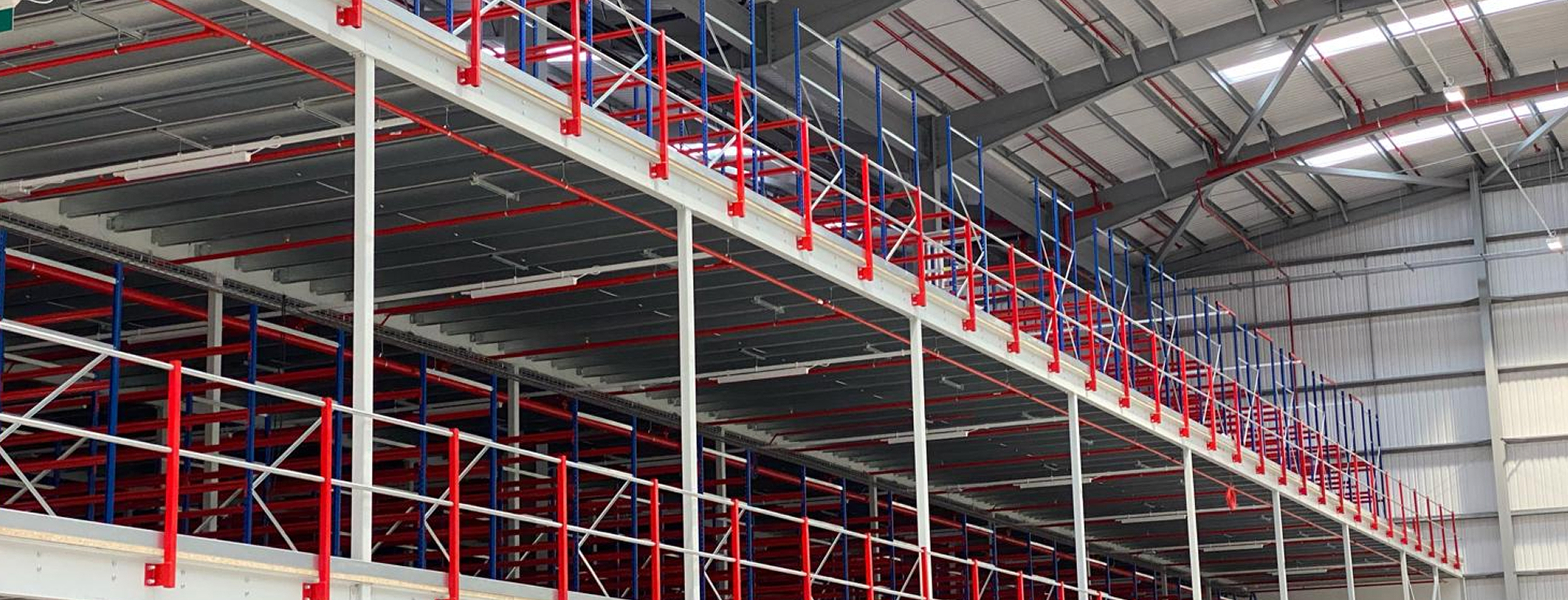
Businesses often ask one key question before investing in additional space: how much does a mezzanine floor cost? While pricing is an important consideration, the true value of a mezzanine floor comes from the operational efficiency, storage capacity, and long-term scalability it provides.
At Bradfields, every mezzanine project is fully bespoke. This means mezzanine floor costs vary depending on your requirements, structural specifications, safety measures, and intended use. In this guide, we break down the key factors that influence mezzanine pricing and explain what should be included in a professional mezzanine quote.
What Affects Mezzanine Floor Costs?
Site Size & Structural Restrictions
Every mezzanine project begins with an initial conversation and fact-finding meeting. A site visit allows us to assess the premises footprint, ceiling height, column spacing, structural material, floor load capacity, fire and safety, and access routes – all of which influence the final design.
Existing structural constraints may dictate column placement, beam depth, or overall layout. It may also indicate that additional structural work is required, which will increase costs. Our experienced design and fabrication teams assess these factors early in the process, helping us to ensure all mezzanines are engineered to maximise usable space without limitations and mitigate issues later.
Load Weights & Structural Integrity
Load requirements are among the most critical cost drivers in the design and manufacturing of a mezzanine floor. Whether the structure supports inventory, shelves, pallet racking, machinery, AMRs, offices, or high-density storage, the load rating must be accurately engineered.
Naturally, higher load capacities require stronger steel partitions and structural calculations. In contrast, unusual-shaped loads will require bespoke, complex fabrication to accommodate your inventory. Every mezzanine project requires a tailored engineering and fabrication approach.
Space Capacity & Use Cases
We don’t believe in off-the-shelf mezzanine solutions. Every industry is different, with varying purposes and storage expansion requirements. For example, a car dealership may require a single-storey mezzanine for its customer service department. This setup may benefit from a minimalist, open-plan design to accommodate additional desks and personnel. Whereas a large retailer may require multi-tier racking solutions to accommodate both human and robotic workflows. Each use case needs to be assessed and addressed individually.
At Bradfields, our quotations factor in structural specifications, flooring types, safety requirements and access solutions to meet your specific storage solution.
Accessibility & Safety Requirements
Mezzanine floors are designed and built around human needs as much as they are around products and machinery. The footprint of your premises will influence the selection of safe access points and routes to support efficient workflows. Staircases, goods lifts, pallet gates, chutes, and conveyor belts should all be considered when configuring your mezzanine floor.
With each of these access points and walkways, safety must be considered. We conduct a thorough risk assessment to ensure every eventuality is covered. This involves incorporating handrails, bollards, and other fire-rated safety measures to protect your people, products, and structure.
Supporting Future Needs & Scalability
It’s important to remember that a mezzanine is not just a solution for today; it’s an investment for future growth. As part of our fact-finding, we establish your business goals and design a mezzanine floor that supports your mission, all of which is factored into your quotation.
Whether you’re planning to expand product lines and require additional storage, implement AMR operations, or bring more departments in-house for a complete turnkey service, bespoke mezzanines can adapt to your evolving needs. This provides long-term flexibility while supporting future business growth and operational decisions.
Labour, Consultancy, & Project Management
Beyond physical materials and high-quality steelwork that come with a price tag, a mezzanine quotation also reflects the expertise behind the structure. To achieve a first-class, functional, customised, and fully compliant mezzanine, you need a range of skills to deliver these complex projects successfully.
Essential behind-the-scenes costs may include:
- Structural engineering and calculations
- Detailed design and real-time configuration
- Skilled fabrication and finishing
- Experienced installation teams
- On-site, dedicated project management
- Continuous communication and support
With Bradfields’ complete turnkey service, we factor each of these costs into your final quote. Clients receive a clear breakdown, operational timelines, a single point of contact, and no surprise invoices upon completion. We have found that this approach streamlines the process, improves efficiency, and reduces costs for mezzanine installation.
What’s Included in a Bradfields Mezzanine Quote?
As we’ve mentioned, a Bradfields mezzanine quotation goes beyond the materials and installation. It represents the skill sets and expertise you’ll have access to, as well as your confidence that we’ll deliver a high-quality, top-performing, and long-lasting mezzanine.
Expert Design & Configuration
Using the latest CAD design software, our in-house designers work with clients to curate their ideal mezzanine within their site footprint. This allows customers to view and interact with the mezzanine in situ and make any additional changes before fabrication. The design stage is essential to ensure the structure’s stability and strength for individual case applications, as well as to dictate accuracy in fabrication and installation.
Interiors to Reflect Your Brand
For mezzanines being used for offices, showrooms, or specialist areas, Bradfields provides a complete interior design integration. This includes internal partitions and ceilings to maximise space and build additional rooms. We also consider glass panelling, lighting, ventilation, and finishes that complement operational needs, brand identity, and pleasant working conditions.
Reliable & Trusted Procurement
Once your mezzanine is designed to your bespoke requirements and branding, our team will source all required materials and parts. With a network of trusted suppliers and professionals at hand, we can source and supply premium materials for a high-end, robust structure.
Precision Fabrication & Features
Our Derbyshire location houses innovative technology and engineering methods for pinpoint laser cutting and fabrication. By keeping all processes in-house, we can help reduce costs while overseeing every stage with control, accuracy, and quality. Where required, we also include insulation solutions to support thermal performance, acoustic control, and fire protection, creating environments that are both functional and comfortable.
Prompt & Professional Installation
Mezzanine installation is fulfilled by our experienced engineers who are familiar with your structure’s design and fabrication. This ensures a swift, accurate, and secure process with minimal disruption to your operations. With an on-site project manager overseeing the entire installation, you can trust us to complete the job efficiently, so your mezzanine is up and ready to use in no time.
Structural Compliance & Sign-Off
Mezzanine compliance is never an afterthought with Bradfields. Safety and structural regulations are ticked off at every stage to ensure compliance with applicable building and fire safety standards. This provides a quick and stress-free completion, with Bradfields managing all documentation, inspections, and sign-offs.
The Long-Term ROI of a Mezzanine Floor
When designed, engineered, and installed correctly, a mezzanine floor provides more than additional square footage. It becomes a strategic asset that covers far more than the upfront cost. With a mezzanine floor, you also benefit from long-term advantages, such as:
- Unlocking unused vertical space
- Allowing for maximum storage capacity
- Potentially increasing business value
- Improving operational workflows
- Increasing productivity and efficiency
- Supporting future growth and development
- Save costs and time, and avoid the disruption of relocating
Elevate Your Space with Bradfields
As specialists in high-quality mezzanine and fit-out solutions, we offer a full turnkey service for bespoke storage solutions. Whether you’re optimising industrial, commercial, or retail space, we can support you through the entire process to level up your operations.