Warehouse Fit-Out Planning: Who Coordinates What?
Like an F1 pitstop team, an effective warehouse fit-out comes down to having the right people in the right roles.
A warehouse fit-out is about creating a space that supports productivity for years to come. So, getting the layout and assets right the first time is essential. Storage systems, mezzanine floors, automation and offices all need to come together to create a functional warehouse. That’s where the right people are key.
Effective warehouse fit-outs involve several people and skill sets that support and impact one another. While everyone is an expert in their own field, you also need individuals who can oversee and manage every part. But who manages a full warehouse fit-out?
In this article, we break down the different people and responsibilities involved in planning a warehouse fit-out, from start to sign-off.
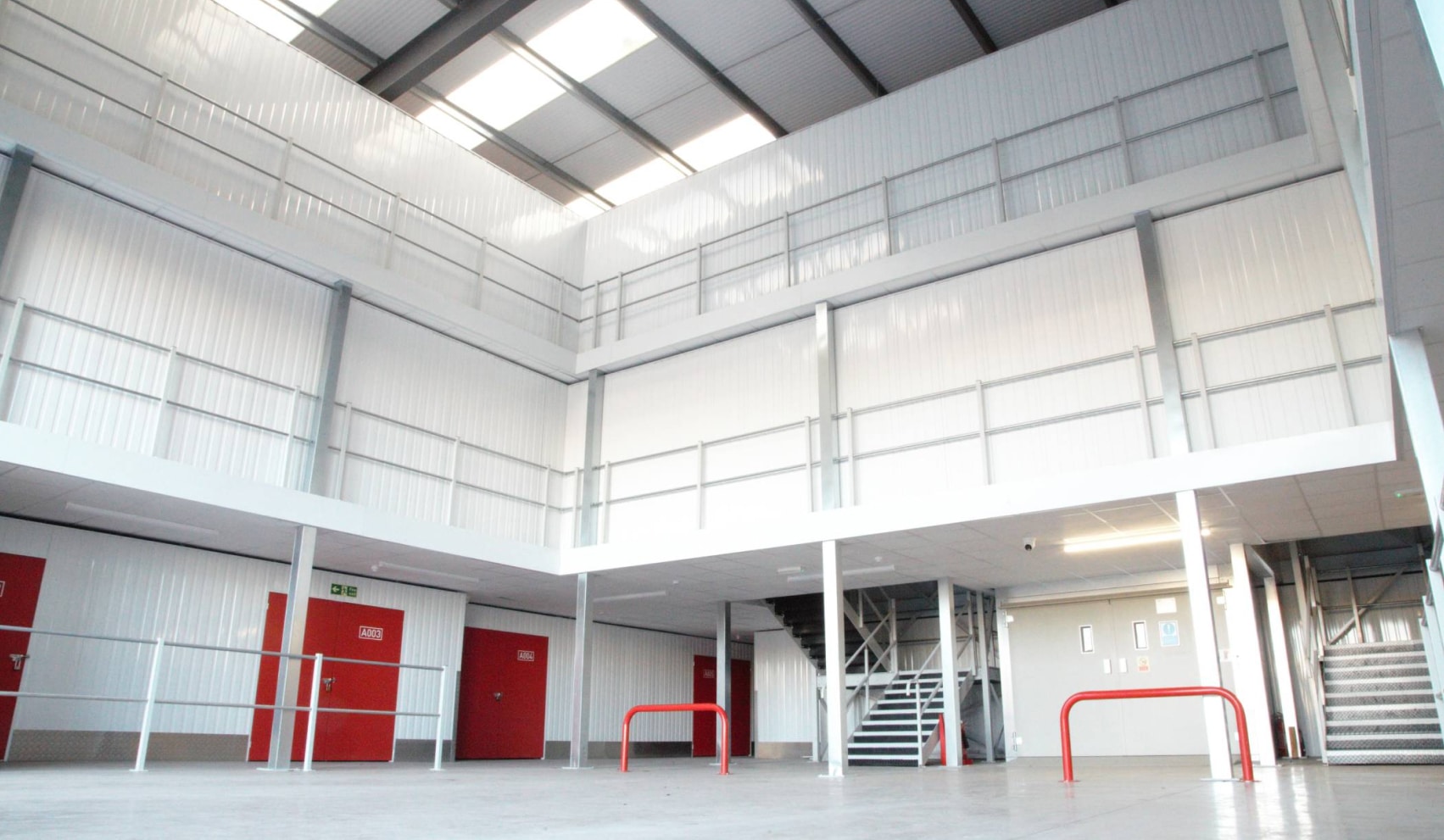
Who Manages a Warehouse Fit-Out?
Although there should be a fit-out coordinator who oversees the entire project, there are also key stakeholders who manage their area of responsibility.
The number of people managing a commercial fit-out depends on the size and complexity of the project. For example, larger warehouse fit-outs installing mezzanine floors, shelving and offices require:
- Fit-Out Coordinators
- Operations Managers
- Project Managers
- Warehouse Consultants
- Commercial Architects
- Structural Engineers
- Quantity Surveyors
- Health & Safety Consultants
- Building Control
- Specialist Suppliers
What is Included in a Warehouse Fit-Out?
There are many elements within a warehouse fit-out to transform an empty or outdated warehouse shell into a functional workplace.
The elements required will depend on your business needs, warehouse capabilities, and operational goals. Together, they help to optimise space and improve efficiency.These warehouse fit-out additions typically include:
Interior fit-out:
- Mezzanine floor
- Pallet racking
- Shelving systems
- Picking & packing stations
- Lifts & conveyor systems
- Office spaces & layouts
- Staircases & access routes
- Lighting & electrical systems
- Flooring & interior design
- AMRs & automation systems
- Security & fire protections systems
- Safety barriers
- Ventilation systems
External Considerations
- Car parks
- Electrical charging stations
- Solar panels
- CCTV systems
While considering what elements are essential to solve an initial problem, warehouse fit-out designers should also factor in expansion opportunities. Knowing growth goals will influence the design and layout of your warehouse fit-out so it can evolve with your business.
How Do You Plan a Warehouse Fit-Out?
Successful warehouse fit-outs start long before fabrication or installation starts. It begins with understanding the scope of your project, the assets required and the people with the right skills to achieve your vision.
The best commercial fit-out projects focus on how your business operates and how the people, products and equipment move safely and smoothly through the building every day. The planning process for a standard warehouse fit-out tends to include the following four stages.
1. Understanding Operational Requirements
A site survey can help your project manager evaluate your pain points, identify areas for improvement, and collect key information for the design phase, such as:
- Existing footprint and structural limitations
- Stock quantities and profiles
- Picking and packing methods
- Staff, machinery and equipment used
- Automation requirements
- Vehicle movements
- Future growth plans
2. Designing Your Warehouse Layout
With accurate operational information, commercial fit-out designers and architects can develop the best layout to enhance your space, including:
- Mezzanine positioning
- Racking configuration
- Office locations
- Welfare facilities
- Goods-in and dispatch areas
- AMR and machinery integration
- Pedestrian and machine walkways
- Fire escape routes
Read More: Importance of the Design Phase During a Mezzanine Project
3. Coordinating Specialist Contractors
Every warehouse fit-out is bespoke. This means multiple specialists may be needed to ensure the design is practical, compliant, and fit for purpose. Fit-out specialists include:
- Mezzanine manufacturers
- Structural engineers
- Fire protection and safety specialists
- Electrical contractors
- Mechanical services
- Automation services
- Building control
4. Installation & Sign-Off
Once the design is signed off, fabrication specialists can begin building bespoke fit-out pieces.
A fit-out contractor and/or project manager will plan a phased approach to ensure each element is installed in a logical sequence. This helps reduce downtime and avoid unnecessary disruption.
When each stage is planned, designed, and installed correctly, the transition from an empty warehouse to an optimised operational facility becomes significantly smoother.
Read More: Understanding Mezzanine Floor Costs & Quotes
What Does a Fit-Out Contractor Do?
A fit-out contractor manages the practical delivery of your warehouse fit-out project. While everyone has an important role, one person needs to coordinate the entire project and be a clear point of contact for customers.
They may also be referred to as a project manager, but they are ultimately experts in these types of warehouse renovations and are responsible for the entire scope. Using their experience, they help maintain deadlines, budgets and customer expectations, including:
- Supplier coordination
- Installation scheduling
- Risk assessments and safety at all levels
- Quality control
- Communication between all parties
- Final sign-off and handover
Why Having the Right Team Makes All the Difference
A warehouse fit-out has numerous moving parts, so early collaboration is extremely valuable.
When designs, manufacturing, and installation are considered simultaneously, you can reduce delays and improve the finished results. By pulling everyone’s expertise together, you create a more cost-effective and seamless process. With the right warehouse fit-out team, you can enjoy:
- Faster project delivery
- Fit-out accuracy
- Fewer design changes
- Clearer communication
- Lower overall project costs
- Confidence in the end result
- Improved use of available space
- Flexibility for future expansion
Warehouse Fit-out FAQs
What is a warehouse fit-out?
Who coordinates warehouse refurbishments?
How long does a warehouse fit-out take?
Why is warehouse fit-out planning and coordination important?
Can Bradfields manage a warehouse fit-out project?
Elevate Your Space with Bradfields
As specialists in high-quality mezzanine and fit-out solutions, we offer a full turnkey service for bespoke storage solutions. Whether you’re optimising industrial, commercial, or retail space, we can support you through the entire process to level up your operations.
How to Increase Retail Space Without Relocating
Transforming Existing Empty Space into Functional Flooring Solutions
One of the biggest and ongoing problems for retailers is available space. While moving to larger premises may seem like the obvious option, it’s not always the best. More importantly, it’s not the only solution.
Before undertaking the disruption of moving your business, it’s worth considering whether you can increase the retail space that already exists within your premises. In this guide, we’ll explore retail mezzanine expansion ideas that unlock space, improve layouts and support future growth without relocating.
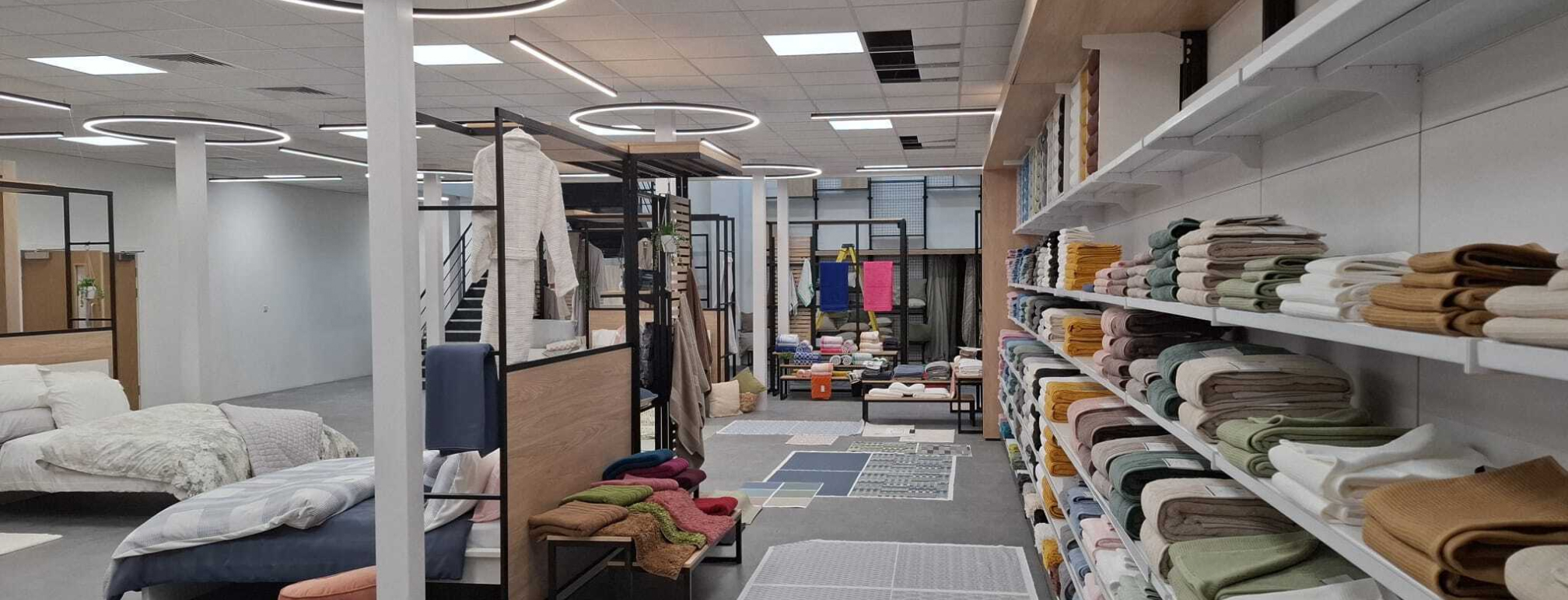
Why Finding Retail Space Becomes Challenging
As retail businesses grow, it often creates new operational pressures to meet customer, operational and market demands. As product ranges expand and customer expectations evolve, retail stores, showrooms and warehouses can quickly find themselves facing common space issues, such as:
- Limited room for new displays
- Insufficient stock storage
- Congested shop floors
- Lack of consultation spaces
- No privacy for staff meetings
- Meeting online demands such as click-and-collect
- As teams grow, staff facilities do too
These challenges can affect customer experience, staff morale and day-to-day efficiency. Not to mention the cost of resolving each of these issues. The good news is that many retail premises can resolve most, if not all, of these problems by transforming unused vertical spaces. Installing bespoke retail mezzanine floors to meet their unique requirements. But how? Learn More About Retail Mezzanines
How to Create Extra Retail Space without Relocating
Here are some of the most popular ways retailers across the UK are utilising mezzanine floors:
Increase Stock Capacity
When stock starts taking over the shop floor, products can be hard to see, and the shopping experience quickly suffers.
Many retailers want to keep additional stock on-site to meet demand and customer expectations. Sports or shoe stores, for example, need to store numerous sizes to appease their range of customers. To avoid sacrificing valuable display space, a mezzanine floor provides additional storage capacity for retailers. Keeping displays front and centre, and stock nearby to improve the overall shopping experience.
Using mezzanine floors for additional storage is ideal for retailers who handle fast-moving stock and bulk inventory, samples, or seasonal products.
Reconfigure Existing Layout
When retailers think about expansion, they tend to focus on what’s already there. They rarely look up and visualise what can be achieved with the empty space above their heads.
Many buildings contain valuable vertical space. Businesses just don’t know how to optimise it. By installing a retail mezzanine floor, this area can become a functional floor that addresses space constraints, resolves storage issues, and enhances the building’s layout with minimal disruption.
By opening up this space, retailers can build upwards, literally. Mezzanines provide the flexibility to accommodate growth and evolving needs while retaining their location, customer base and operational setup.
Build Multi-Purpose Spaces
Modern retail spaces need to do more than simply display products. There’s a requirement for consultation spaces, demonstration areas, click-and-collect zones and staff facilities.
A mezzanine floor can help retailers achieve the ultimate showroom or store experience by making the space work more efficiently.
Whether you prefer an open-plan mezzanine to create a curated customer experience, or partitioned walls to further optimise the floor with offices, break rooms, and storage, we can design a mezzanine that delivers more than just extra floor space.
Move Operational Tasks Upstairs
A great way to increase retail space is to move admin and operational tasks off the shop floor. This opens up valuable space for more products and creates a seamless shopping experience.
Whether it’s your customer service department, a sales office, or management meeting rooms, a mezzanine floor allows you to create a dedicated space for these behind-the-scenes tasks and teams.
Not only does this provide a better-suited environment for these activities, but it also keeps the lower-level customer-focused with product displays, fitting areas, and paying stations.
Invest in Future Growth
Although a mezzanine floor can resolve an initial space issue, due to its flexible structure, retail mezzanine floors are built with future growth and requirements in mind.
For retailers, product ranges will expand, teams will increase, and customer and market demands will evolve. A well-designed mezzanine floor provides the reassurance and ability to adapt to these changes – again, without the need to relocate.
Rather than a short-term fix, many retailers view a mezzanine floor as an investment in future capacity and scalability that evolves with their business.
Relocating Your Store vs Expanding Your Space
When space becomes limited, retailers generally face two options: Relocate or expand.
Option 1
Relocate to a larger site
Moving to a larger premises can provide additional space, but it also requires a lot of planning and brings numerous ongoing challenges:
- Finding suitable premises
- Business disruption during the move
- Reconfiguring layouts and operations
- Potential impact on staff, suppliers and customers
- Customer confusion or loss of visibility
- Impact on customer experience and satisfaction
- Accumulative costs of moving
Option 2
Expand within your existing premises
Often, there is the option to expand your current space. Not externally, but internally. A mezzanine floor enables retailers to build up, creating additional space while staying in their existing location. By redesigning the existing environment, retailers benefit from:
- Optimised layouts and workflows
- Streamlining processes
- Increasing storage capacity
- Expanding display areas
- Support future growth
- Minimising disruption
- Saving money on legal or moving costs
Is a Retail Mezzanine Right For You?
Our teams work closely with retailers to understand how customers and staff move through their space. We also review how products are displayed in stores, any pain points and where growth opportunities exist. This allows us to find the best space-maximising solution for you and your business needs.
Whether you’re looking to increase showroom space, improve stock management, or futureproof operations, we design, manufacture and install bespoke retail mezzanine floors that support your business today while providing flexibility for tomorrow. Download Our Retail Mezzanine Floor Guide.
Elevate Your Space with Bradfields
As specialists in high-quality mezzanine and fit-out solutions, we offer a full turnkey service for bespoke storage solutions. Whether you’re optimising industrial, commercial, or retail space, we can support you through every stage of your warehouse redesign and help improve warehouse efficiency with minimal disruption to operations.
How To Plan a Warehouse Upgrade Without Disrupting Operations
Warehouse optimisation is essential for growing businesses looking to improve efficiency, increase storage capacity, and support long-term operational growth. However, upgrading a warehouse can feel disruptive if it’s not carefully planned. Without the right strategy, businesses risk workflow interruptions, downtime, and costly delays.
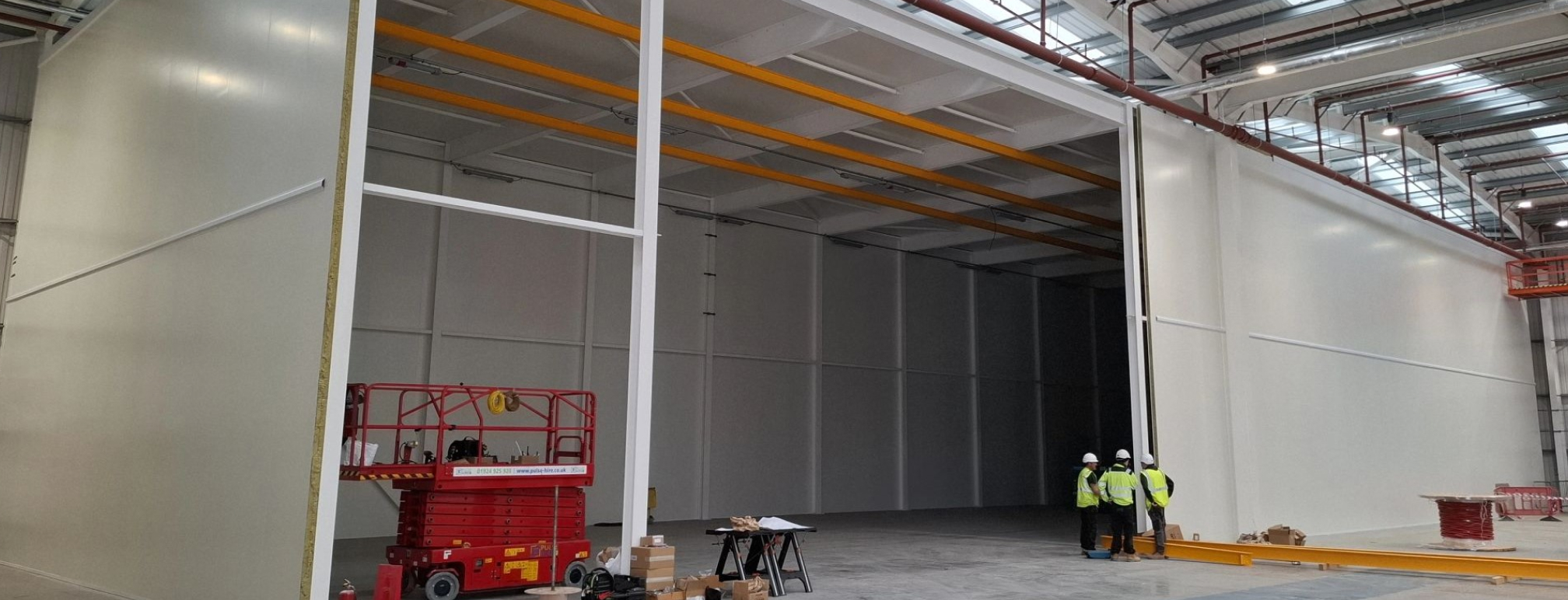
How to Upgrade Your Warehouse with Minimal Disruptions
Start With a Clear Understanding of Your Current Setup
Before making any alterations, it’s essential to fully understand how your warehouse currently functions. This involves looking beyond the square footage and storage capacity.
Consider how goods, vehicles, people, and AMRs move and work together – are there bottlenecks, inefficiencies, or safety risks? This insight helps identify inefficiencies, highlight opportunities, and form the foundation of effective warehouse optimisation.
Consider the following questions
- Where are delays most common?
- Are there underutilised areas?
- Are there overcrowded areas?
- How efficient are workflow routes?
- Is vertical space being used effectively?
Define Your Objectives & End Goals
Before making changes, it’s important to understand exactly what you want your warehouse upgrade to achieve. By prioritising your objectives, you can ensure that every decision contributes to improving warehouse efficiency and safety, rather than further complicating processes.
It can also help define the project’s scope and keep it true to its end purpose.
Objectives may include
- Increasing storage capacity
- Improving picking speed
- Enhancing operational safety
- Incorporating AMRs
- Bringing departments in-house
Consider Workflow at Every Stage of Your Warehouse Redesign
A warehouse upgrade isn’t just about creating more space. It’s about making necessary changes to improve how that space functions. Every design decision should support a smoother workflow and help improve warehouse efficiency across daily operations.
Poorly planned layouts can elongate picking time, cause congestion, and reduce productivity. When designed and planned correctly, warehouse optimisation should simplify processes.
Key considerations may include
- Logical product placement based on demand
- Clear, unobstructed routes for staff and equipment
- Sensible routes between departments
- Convenient access to high-turnover stock
- Safe separation of pedestrian and machinery zones
Use Vertical Space to Improve Warehouse Efficiency
Part of the design and planning stage should include what space you have available, and how it’s currently being used.
This applies to vertical space too, which is just as valuable as floor space. Expanding upward with a mezzanine floor is one of the most cost-effective ways to increase capacity without incurring the costs of expansion or relocation.
They can also be installed with minimal disruption to your daily operations.
A well-integrated mezzanine can
- Double your usable space
- Create dedicated zones for offices, storage or displays
- Improve overall layout efficiency
- Increase warehouse safety
Identify Risks Early
An overlooked part of warehouse planning is risk analysis. Every upgrade carries potential risks. From operational disruption and staff safety to project delays that can impact customer orders.
By highlighting these risks early on, they can be mitigated through contingency planning to protect productivity and continuity.
Key considerations may include
- Areas where operations could be interrupted
- Health and safety considerations during installation
- Access restrictions for staff, equipment or deliveries
- Dependencies on external suppliers or timelines
- Customer satisfaction and internal KPIs
Plan in Phases to Maintain Productivity
One of the easiest ways to avoid disruption to operations is to break your project into manageable phases.
Rather than attempting a complete transformation in one go, phased upgrades allow parts of your warehouse to remain operational, so your business can run as usual without affecting KPIs or customer satisfaction.
Upgrading in phases ensures continuity, reduces risk, and gives your team time to adapt.
An example of a phased upgrade could be
- Phase 1: Reorganise stock and clear designated work zones
- Phase 2: Install structural elements such as a mezzanine floor
- Phase 3: Optimise layout and workflow around the new structure
Communicate With Your Team
Even the best-laid plans can falter without clear communication and timelines. Your team plays a vital role in maintaining productivity during a warehouse redesign.
Keeping teams informed ensures everyone understands what’s changing, why it’s happening, and how it will benefit their work. Clear communication can help minimise confusion and maintain morale throughout.
Key information to share includes
- Regular updates on changes
- Clear timelines for when work is happening
- Defined roles and responsibilities
- Reinforced safety measures during renovations
- Update customers on ongoing work
Avoid Common Mistakes
Naturally, errors can arise during warehouse renovations. However, many of these are unnecessary challenges due to avoidable mistakes.
Common pitfalls include
- Underestimating the importance of design
- Not understanding the full scope or end goal
- Failing to account for workflow changes
- Not involving key personnel
- Attempting to achieve everything all at once
- Not engaging with specialists early in the process
Know When to Bring in the Experts
While internal insight is invaluable, key individuals often have other tasks to attend to – leaving your project delayed or rushed and open to mistakes. By partnering with an external specialist, such as Bradfields, we can leverage your insights and add perspective that enhances the entire process.
From initial concept and layout design to installation and project management, working with mezzanine experts ensures every element of your warehouse upgrade aligns with your goals and best practices. This is particularly important when introducing structural changes, such as mezzanine floors, where precision planning and compliance are critical.
Elevate Your Space with Bradfields
As specialists in high-quality mezzanine and fit-out solutions, we offer a full turnkey service for bespoke storage solutions. Whether you’re optimising industrial, commercial, or retail space, we can support you through every stage of your warehouse redesign and help improve warehouse efficiency with minimal disruption to operations.