Why Warehouse Fit-Out Projects Go Over Budget
A warehouse fit-out can appear extremely well budgeted at the start.
The mezzanine has been quoted. The racking has been priced. Access, lighting, safety barriers, fire protection, and office areas may all appear to be covered. Everything has seemingly been considered. But costs often rise in the gaps between those elements.
A lighting layout may depend on the final mezzanine design. Racking may need to change once access routes are confirmed. Building control may raise points that affect layout, safety, or installation.
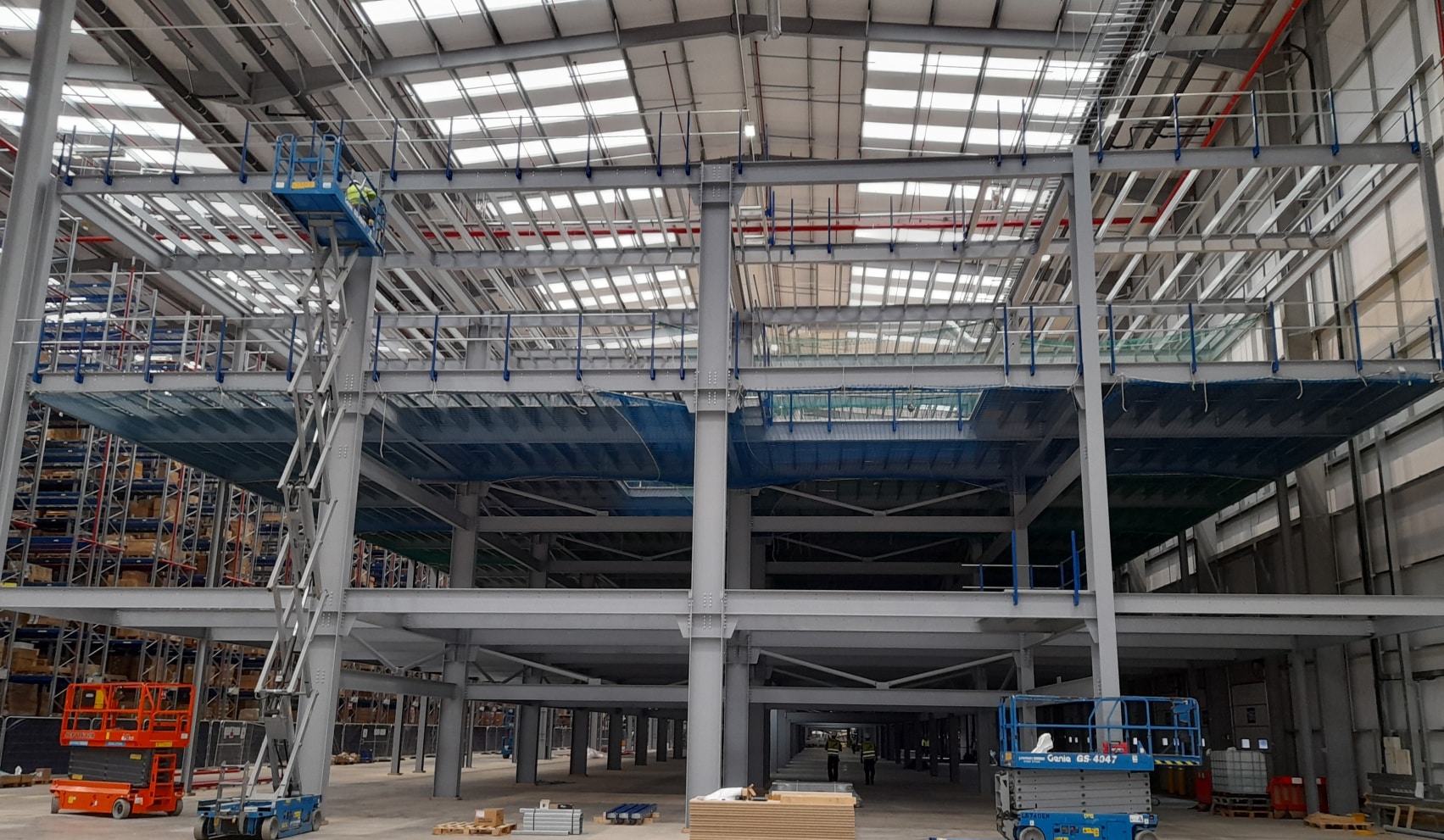
We have previously discussed the hidden costs of not expanding your warehouse space, but that’s not the only avenue for costs to creep. Once a business decides to invest in its space, there is another risk to consider: what happens when the fit-out is not planned as one joined-up internal project?
Warehouse fit-outs rarely go over budget because of one single mistake. More often, costs increase because the original scope did not fully account for how the different parts of the project affect each other.
The Initial Scope Is Not Always the Full Picture
Early quotes can be useful, but they do not always tell the whole story. A quote for a mezzanine floor may be accurate for the structure itself. A racking quote may be accurate for the storage system. A separate contractor may price lighting, barriers, office space, or fire protection correctly within their own scope.
The issue is not always that something has been missed. It is that each part may have been priced in isolation. A warehouse fit-out is rarely just a collection of separate items; it is an internal working environment. Each element needs to support the next, from access and goods movement to safety, storage, services, and workflow.
When the full project is not mapped early enough, businesses can find themselves making additional decisions after the budget has already been approved. That is when costs become harder to control.
Separate Suppliers Can Create Gaps Between Responsibilities
Using specialist suppliers is not the problem. In many warehouse fit-out projects, specialist input is essential.
The risk comes when no one has clear responsibility for how those specialist elements come together. One supplier may assume another is dealing with access. Another may price for their own installation but not the wider site preparation. A client may think something is included, only to discover later that it sits outside the agreed scope. These gaps are often small at first, but they can create bigger issues once the project is live.
For example, a mezzanine may be designed correctly, but the wider layout may still need adjustment once storage, pallet gates, barriers, lighting, or workflow are considered. A fit-out contractor may complete their own work properly, but the customer may still be left coordinating dependencies between trades. That can place more pressure on the client than expected, as they become the person trying to join the project together.
Late Changes Cause Costs to Climb
Late changes are one of the most common reasons fit-out costs increase. Some changes are unavoidable. Site conditions can shift, operational needs can evolve, and practical issues may only become visible once work begins. But many changes become more expensive simply because they are discovered too late. A layout change during planning is one thing. A layout change after fabrication, installation, or supplier scheduling is another.
If access routes have not been agreed early enough, storage layouts may need to be revised. If lighting is considered after the mezzanine design is finalised, the specification may need to change. If fire protection or building control requirements are not reviewed early, the project may need additional work before it can move forward.
These changes do not just affect materials. They can affect labour, lead times, installation dates, and the sequencing of other works. That is why early coordination matters. It gives the project team more opportunity to identify dependencies before they become expensive.
Delays Have a Cost, Even When the Work Is Correct
Not every budget issue comes from something being installed incorrectly. A supplier can do exactly what they were asked to do, but the project can still suffer if the sequence is wrong. One trade may be waiting for another. A site may not be ready. A decision may be delayed because the right information was not available at the right time.
These delays can create a chain reaction. If a mezzanine installation moves, the follow-on works may move with it. If racking cannot be installed on time, storage plans may be affected. If office or welfare areas are delayed, staff movement or operational planning may need to change.
For a live warehouse, factory, or fulfilment space, these delays can be more than inconvenient. They can affect picking, packing, production, stock access, loading, and day-to-day movement through the building. The cost is not always visible on the fit-out invoice. It can appear in lost time, reduced productivity, temporary workarounds, and disruption to the wider business.
How to Reduce Budget Risk Before Work Starts
The best time to control cost is before the project has been split into separate packages. At that stage, there is still time to look at the fit-out as one internal environment. The mezzanine, storage, access, safety, services, and fit-out requirements can be reviewed together, rather than being treated as separate decisions.
Before approving a warehouse fit-out budget, it is worth clarifying certain key points:
- Which elements are included in the agreed scope
- Which works are excluded or require separate suppliers
- Who is responsible for coordinating dependencies between trades
- What approvals are needed before installation can begin
- How access, safety, storage, and services affect each other
- How the project will be phased if the site remains operational
This does not mean every project needs to become larger or more complex. It means the full requirement should be understood early, so the business can make informed decisions about budget, scope, and delivery. A well-planned fit-out should reduce uncertainty, not create more of it.
Bring Bradfields into the Conversation Early
The best time to involve Bradfields is when you know your space needs to work harder, but before the full project has been split into separate supplier briefs.
At that point, there is still room to understand how the key internal elements connect. A mezzanine may affect access. Storage may affect workflow. Fire protection, lighting, safety, and services may influence the final design. Office or welfare areas may change how the space is used day to day.
By considering these elements together, Bradfields can help create a clearer route from initial brief to finished space.
Elevate Your Space with Bradfields
Bradfields helps businesses make better use of the space inside their building. From providing bespoke mezzanine structures to coordinating storage, access, safety, and fit-out solutions, we deliver turnkey internal projects that make every square metre work harder.
Are You Planning a Mezzanine, or Planning the Space Around It?
Most mezzanine projects start with a simple problem: the business needs more space.
That might mean more room for stock, more production capacity, a dedicated packing area, additional office space, or a way to avoid relocating altogether. A mezzanine floor can be a practical and cost-effective way to create that extra capacity within an existing building.
But the mezzanine itself is rarely the whole story. Once a new structure is introduced, the rest of the building has to work around it. Access routes may change. Goods may need to move differently. Lighting, fire protection, storage layouts, safety barriers, pallet gates, office areas, welfare space, and workflow may all need to be considered.
The best mezzanine projects are not just planned around the floor. They are planned around the space the floor needs to support.
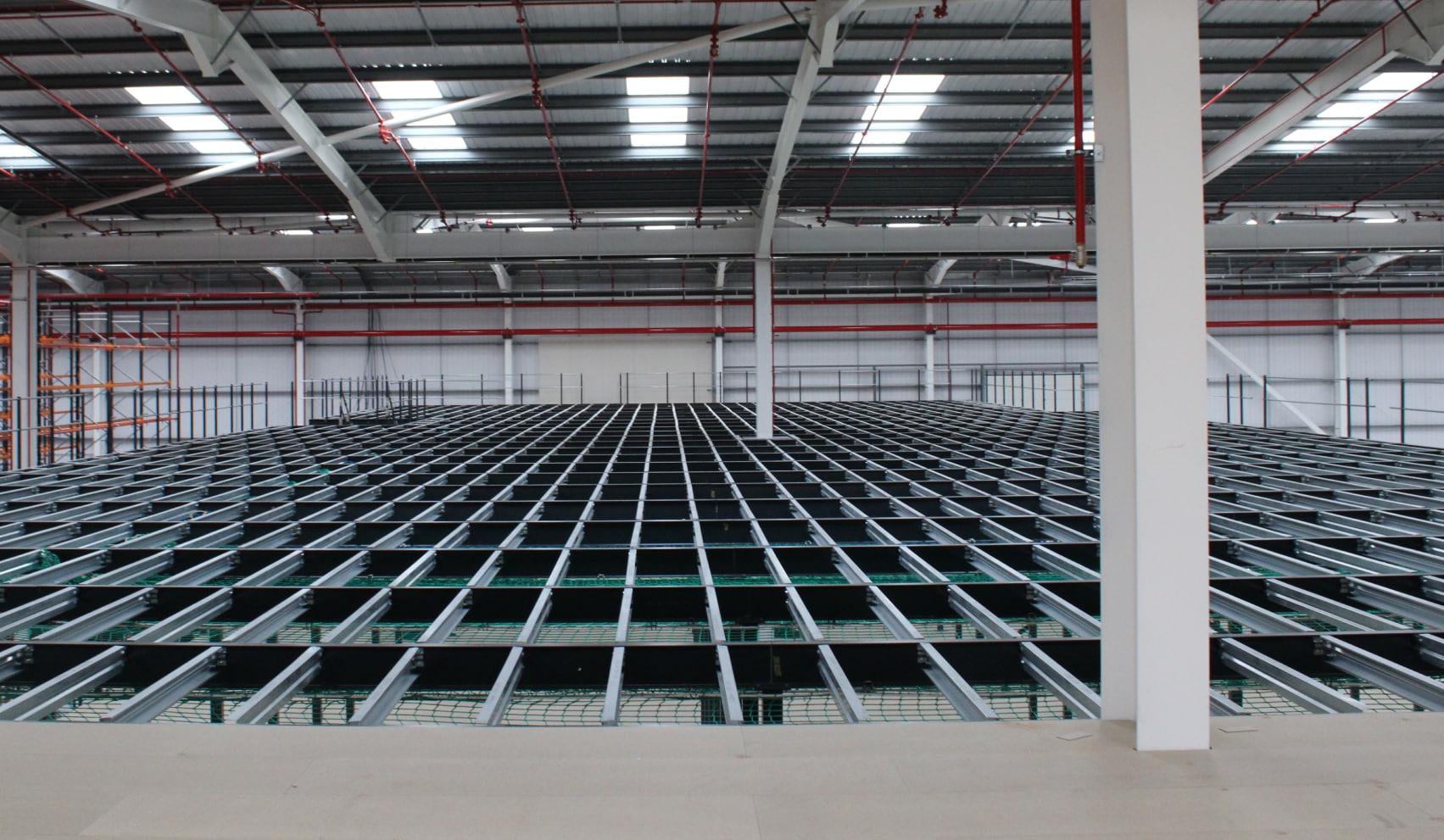
The Mezzanine Is the Structure, Not the Strategy
A mezzanine floor can unlock valuable additional capacity, but extra floor space does not automatically solve every operational challenge.
If the wider layout has not been considered, a business may gain more square metres without improving how the space actually works. Stock may still be hard to access. Picking routes may still be inefficient. People and vehicles may still cross paths in awkward places.
That is the difference between installing a structure and planning a space. A good mezzanine project should consider how the new floor connects to the wider operation. It should support the way people move, how goods are handled, how stock is stored, and how the business may need to use the space in future.
The ‘Real Brief’ Goes Further Than a Mezzanine
When a business says it needs a mezzanine, it is often describing the solution before fully unpacking the problem. The real issue might be that stockholding has increased. It might be that a warehouse team is losing time moving between poorly placed storage areas. It might be that production needs to be separated from packing, or that office and welfare space is taking up valuable ground-floor capacity.
In some cases, the business may be trying to delay a move to larger premises. In others, it may be trying to make a new unit operational as quickly as possible.
The mezzanine may still be the right answer. But it should be planned around the commercial and operational outcome, not treated as a standalone addition.
What Needs to be Planned Around a Mezzanine?
Access is one of the first considerations. A mezzanine needs safe, practical routes for people, products, and equipment. Staircases, pallet gates, goods movement, loading points, and walkways all influence how well the space can be used.
Storage is another important factor. Racking, shelving, stock locations, picking routes, and loading areas all need to work with the mezzanine, not around it as an afterthought. Safety also needs to be built into the project from the start. Barriers, handrails, pallet gates, fire protection, signage, and pedestrian routes all affect how the space operates. There are also several other requirements to consider:
- Lighting, electrics, ventilation, and wider M&E coordination
- Offices, welfare areas, production zones, or packing benches
- Building control, compliance, and fire protection requirements
- Future changes to storage, equipment, workflow, or team structure
This does not mean every project has to become larger than necessary. It means the right questions should be asked early, before the layout, scope, and supplier responsibilities are fixed.
Why Separate Briefs Can Create Weaker Projects
There is nothing wrong with using specialist suppliers. In many projects, specialist input is essential. The issue comes when each part of the project is briefed separately, without one joined-up view of how the finished space needs to work. A mezzanine supplier may design the structure. A racking supplier may plan the storage. Another contractor may handle lighting, barriers, offices, or fire protection.
Each supplier can do their own job properly, but the final result can still feel compromised if the wider space has not been planned as one operational environment.
A layout may need changing because access was not fully considered. Services may need adapting because the fit-out was planned too late. Storage may need to be reworked because the mezzanine has changed how goods move through the building.
These problems are not always the result of poor workmanship. More often, they happen because the project has been planned in fragments.
What a Better Planning Conversation Looks Like
A better mezzanine conversation does not start and end with the dimensions of the floor. It looks at the operation as a whole. Before the project is split into separate briefs, it is worth asking the right questions:
- What does the business need the space to achieve?
- Who will use it, and how will they move through it?
- What needs to be stored, moved, protected, or separated?
- Which services, safety requirements, or access points will be affected?
- What may need to change in the next 12 to 24 months?
These questions help shape a mezzanine project around the way the space will actually be used. A straightforward project should stay straightforward. But even simple projects benefit from understanding the wider context before decisions are locked in.
When to Bring Bradfields into the Conversation
The best time to involve Bradfields is when you know you need more from your space, but before the project has been split into separate supplier briefs.
At that stage, there is still room to look at the mezzanine, storage, access, safety, services, and fit-out requirements together. This makes it easier to identify dependencies, avoid late changes, and create a clearer plan for the internal project.
A mezzanine can create the extra space. The bigger opportunity is making sure the space around it works too.
Elevate Your Space with Bradfields
Bradfields helps businesses make better use of the space inside their building. From providing bespoke mezzanine structures to coordinating storage, access, safety, and fit-out solutions, we deliver turnkey internal projects that make every square metre work harder.
Why a Mezzanine Project Often Involves More than the Floor
Mezzanines should be a complete business solution, not just a structural installation.
When businesses begin exploring the idea of a mezzanine floor, the focus is naturally on creating more floor space. However, the floor is only one part of the entire project.
A successful mezzanine installation requires careful planning around how it’s used. From staircases and access points to storage solutions, lighting and office layouts, every element needs to be considered and work together to create a safe, efficient workplace.
In this article, we explain the different elements associated with a mezzanine floor, and examine how each one can support productivity, safety, and the overall performance of your space.
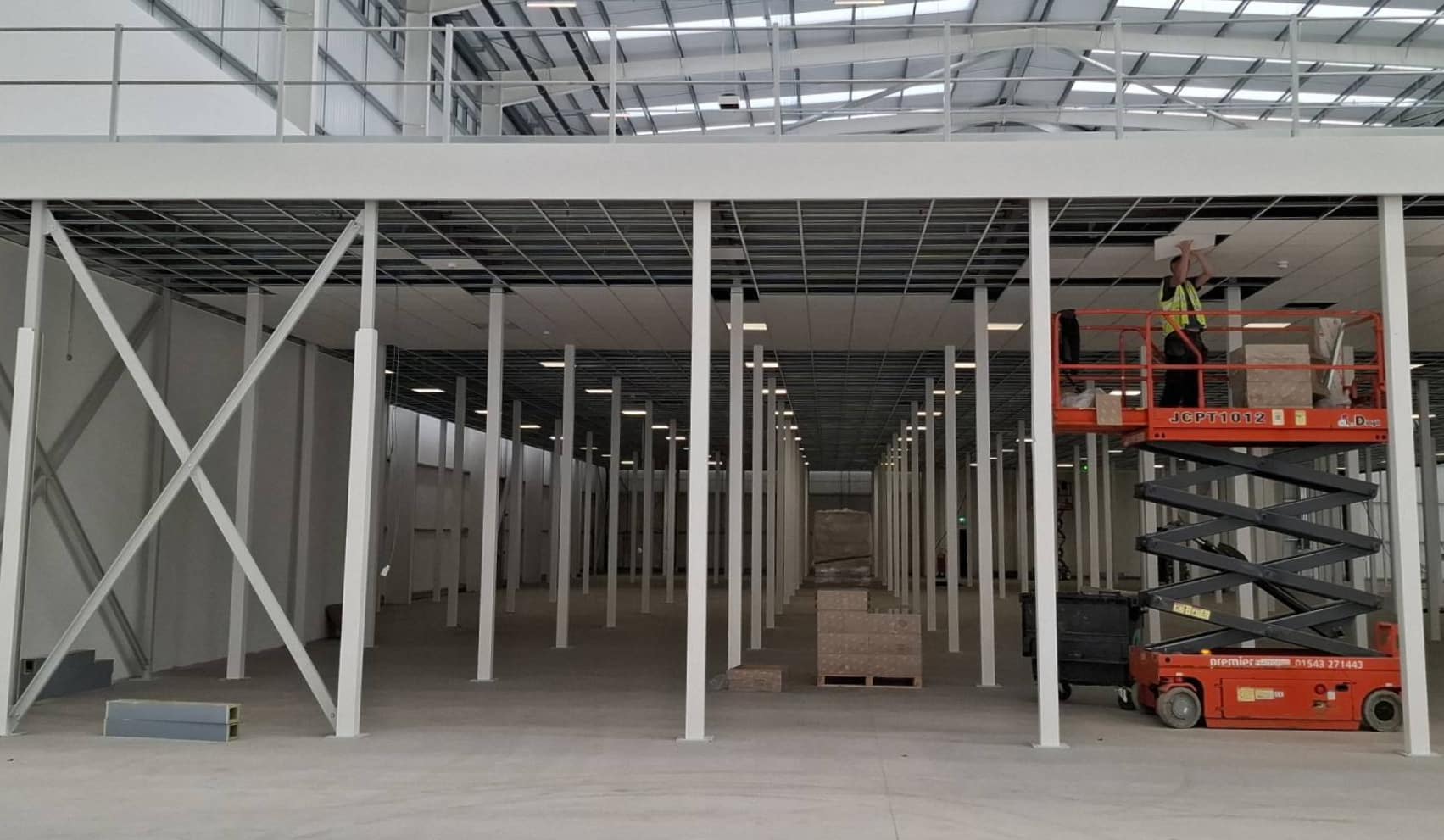
What Else is Needed with a Mezzanine Floor?
One of the most common misconceptions around installing a mezzanine floor is that it just involves adding a raised floor.
In reality, several supporting elements are required to make a mezzanine floor practical, safe and fully operational. For example, a new office will require additional lighting, ventilation and power supplies, whereas a storage mezzanine needs a layout and picking system that supports workflows. Whether you’re installing a warehouse mezzanine to increase storage, implementing a floor for AMRs, or a retail mezzanine for extra display areas, you also need to consider:
- Staircases and access points
- Safety barriers and handrails
- Pallet gates and lifts
- Fire protection systems
- Lighting and electrical systems
- Office fit-outs and partitioning
- Staff welfare facilities
- Shelving and pallet racking
Do Mezzanine Floors Need to Meet Building Regulations?
In most commercial environments, yes, mezzanine floors need to meet building regulations and safety standards.
Building regulations are an important part of any mezzanine structure to ensure it’s safe, accessible and compliant. This includes all the additional elements such as stairs, flooring, shelving and electrical systems. By adhering to them from the start, you avoid costly delays or disruptions. Depending on the intended use of your mezzanine floor, building regulations may cover areas such as:
- Structural design & installation
- Fire safety & emergency exits
- Staircase design
- Loading requirements
- Human & machine accessibility
- Guarding & fall protection
Do Mezzanine Floors Need Fire Protection?
Yes, fire protection is one of the most important considerations when installing a mezzanine flooring system.
Fire safety measures help protect people, products, and premises while supporting operations and ensuring compliance with current regulations. Depending on the mezzanine structure’s size, occupancy and intended use, fire protection measures may include:
- Fire-rated ceilings
- Fire-resistant partitioning
- Sprinkler layouts
- Smoke & CO2 detection systems
- Emergency lights & escape routes
- Fire signage
- Storage of hazardous materials
What Access Is Required for a Mezzanine Floor?
Safe and convenient access to a mezzanine floor is essential for every installation. Not only does it ensure safety for users, but when planned correctly, it can help maximise your available space. The type of access required to a mezzanine depends on its location, size and intended use, but tends to feature:
- Staircases – Provide safe and comfortable movement between levels for humans.
- Goods Lifts – Suitable for people, products and AMRs if required to support workflows.
- Pallet Gates – Allow goods to be transported safely between floors without risk to operators.
- Chutes & Carousels – Streamline and speed up picking and packing processes.
- Safety Barriers – Access points require edge protection to protect staff while maintaining productivity.
What Should You Consider Before Installing a Mezzanine Floor?
To get the most out of your mezzanine floor installation, it’s important to think beyond immediate space requirements and look at long-term solutions.
This is when working with a space optimisation expert can benefit your investment. With mezzanine specialists like Bradfields, we ask the right questions to ensure the correct assets are included within your structure. We consider areas such as:
- Future Growth & Goals – Will you require additional storage or office space over the next 5 to 10 years?
- Processes & Workflows – Will you introduce automation or vehicles, and how will they move around the premises?
- Storage Systems – Will additional or new racking systems be introduced to support larger quantities or heavier SKUs?
- Office Requirements – Are you looking to bring departments together or improve your facilities for colleagues and visitors?
- Building Services – During your mezzanine installation, will lighting, heating, ventilation, or electrical systems need upgrading?
- Building Compliance – Will your mezzanine floor design meet building regulations and health and safety standards?
Read More: The Benefits of Mezzanine Floors
Why a Coordinated Approach is Best for Mezzanine Flooring
Some businesses reach out to separate suppliers to install their mezzanine. However, this can lead to different timelines and priorities, causing inconsistencies, delays and miscommunication.
By working with a mezzanine partner, like Bradfields, we can manage the entire mezzanine project, liaising with key specialists to ensure every element of the project is planned around your specifications. This results in:
- Faster project delivery
- Everyone working towards one design
- Clear communication between contractors
- Fewer design changes
- Reduced project costs
- Quality & compliance throughout
- Confidence in the final outcome
Read More: How to Plan a Warehouse Upgrade Without Disrupting Operations
Mezzanine Floor FAQs
What else do I need with a mezzanine floor?
What access is required for a mezzanine floor?
Can I add extras to my mezzanine floor?
What type of mezzanine floors are available?
Elevate Your Space with Bradfields
As specialists in high-quality mezzanine and fit-out solutions, we offer a full turnkey service for bespoke storage solutions. Whether you’re optimising industrial, commercial, or retail space, we can support you through the entire process to level up your operations.