News and Insights
Our latest News
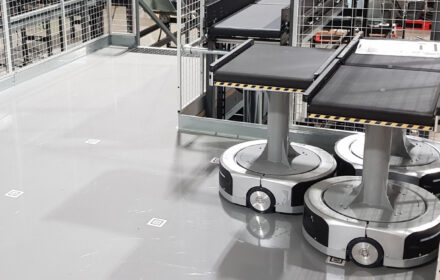

AGVs vs AMRs: Understanding the Key Differences in Warehouse Automation
Warehouse automation in the UK is no longer optional; it’s a strategic necessity. As online commerce grows and labour pressures persist, businesses are turning to robotics to improve throughput, cut costs, and enhance workplace safety.
AMRs and AGVs Are Driving this Shift
While both AMRs (autonomous mobile robots) and AGVs (automated guided vehicles) automate material handling, their technology, flexibility, and ideal use cases differ significantly.
Understanding the key differences between AGVs and AMRs is essential for making the right long-term automation investment for your business.
What are Automated Guided Vehicles (AGVs)?
AGVs are mobile robotic systems that transport materials along pre-programmed pathways using guidance systems such as magnetic tape, wires, laser reflectors, or guide rails embedded in the warehouse floor or environment.
A tried and tested technology, AGVs have seen widespread use in warehouses and factories for decades and excel at simple repetitive tasks along static routes.

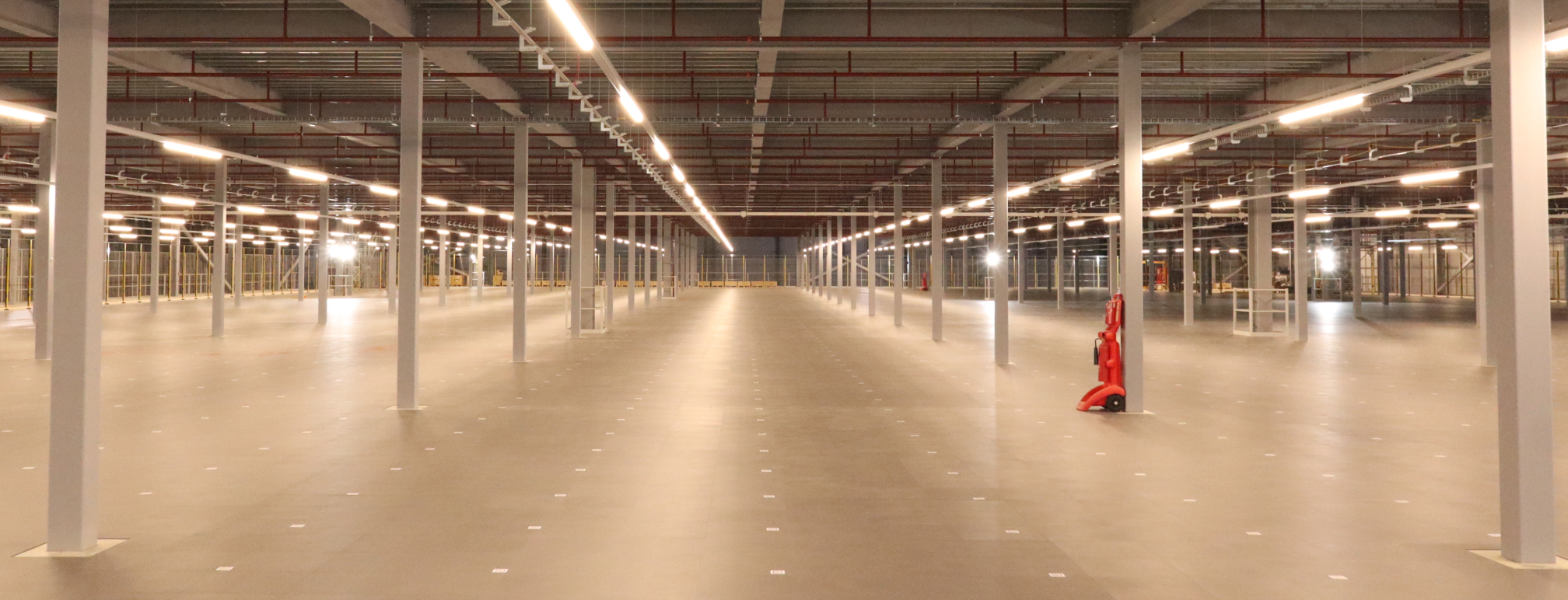
How Bradfields Delivers Additional Capacity
Their reliability makes them a strong option for structured UK warehouse environments with consistent processes. AGVs are widely used in a number of different ways:
- Pallet movement between fixed points
- Manufacturing supply transport
- Bulk handling in high-volume warehouses
- Repetitive staging and dock-to-storage workflows
What are Autonomous Mobile Robots (AMRs)?
AMRs represent a newer generation of mobile robotics. They use onboard sensors, cameras, and advanced algorithms to map and understand their surroundings. AMRs make real-time decisions about where to go and how to navigate around people and obstacles without fixed physical infrastructure.
AMRs can adapt to changes in their environment using LiDAR (Light, Detection and Ranging), SLAM (Simultaneous Localisation and Mapping), and other onboard sensors to detect obstructions and instantly calculate new pathways. This allows AMRs to move safely around people, obstacles, and changing layouts without needing major infrastructure changes. Their adaptability makes them particularly attractive in modern UK logistics environments.
Common AMR Applications
AMRs are seeing widespread usage in a range of different environments:
- E-commerce fulfilment centres
- Goods-to-person picking workflows
- Warehouses with variable products/stock
- Operations requiring flexible scaling
The Role of Autonomous Mobile Robots in Warehouse Design
Autonomous mobile robots (AMRs) are one of the fastest-growing technologies in warehouse automation and are expected to account for 20% of the overall warehouse automation market by 2028.
What Are The Key Differences Between AGVs and AMRs?
Although both technologies move goods autonomously, their operational impact differs significantly.
Navigation/Flexibility
- AGVs follow fixed guidance paths, meaning routes must be planned and installed in advance.
- AMRs navigate freely using real-time mapping and obstacle avoidance, allowing them to reroute instantly when conditions change.
Flexibility/Scalability
- Scaling AGVs often involves extending guidance routes and reconfiguring warehouse pathways.
- AMR fleets can usually be expanded through software updates and fleet management systems, making them easier to scale as demand increases.
Infrastructure Requirements
- AGVs often require floor modifications or installed guidance markers to function, which can increase installation costs and cause operational disruptions.
- AMRs need minimal physical infrastructure beyond Wi-Fi/ Ethernet connectivity and charging stations. Their navigation relies on software and sensor mapping instead of predefined floor tracks.
How AGVs and AMRs Influence Warehouse Layout
Automation performs best when supported by intentional layout design.
Designing for AGV Integration
Because AGVs depend on fixed routes, layout planning must prioritise predictability. This approach suits manufacturing-led environments or distribution centres with repetitive pallet flows. Warehouses using AGVs require certain boxes to be ticked:
- Clearly defined travel corridors
- Consistent floor conditions
- Stable workflows
- Minimal layout change
Designing for AMR Integration
AMRs thrive in streamlined environments that allow safe interaction between people and robots. Their flexibility supports more fluid warehouse design, but good layout planning remains essential to avoid congestion. AMR-ready warehouse layouts typically include certain features:
- Wider or obstruction-free aisles
- Clearly zoned operational areas
- Dedicated charging stations
- Strong wireless infrastructure
Supporting Safe Integration
Warehouse layout design plays a key role in ensuring safe coexistence between people and automation systems. Clear pedestrian walkways, segregated traffic routes, and visible zoning improve safety and operational confidence. Both AGVs and AMRs are equipped with safety different systems:
- Obstacle detection
- Speed controls
- Emergency stop functions
Reducing Manual Strain
By automating repetitive transport tasks, both technologies reduce manual handling and travel time. This supports workforce retention and productivity, particularly in a competitive UK labour market.
Planning for Long-Term Success
Choosing between AGVs and AMRs should not be viewed as a short-term equipment decision. There are a number of key considerations involved in the decision-making process:
- Floor load capacity
- Clear internal heights
- Power supply infrastructure
- Data connectivity
- Future scalability
Automation delivers the greatest value when it is considered early in warehouse design or refurbishment planning. It should not be viewed as an addition at the end of a project, but a crucial component in future-proofing a warehouse design.
How Bradfields Supports Automation-Ready Design
At Bradfields, we work with businesses across the UK to create warehouse layouts that support both current operations and future automation strategies.
Whether integrating fixed-route systems like AGVs or preparing facilities for flexible AMR fleets, our focus is on delivering practical, scalable design solutions that maximise available space and improve operational flow.
From mezzanine installations to optimised storage layouts, we help businesses ensure their warehouse environment is prepared for evolving automation technologies.
Start Planning for the Right Automation Strategy
As automation adoption continues to grow, understanding the differences between AMRs and AGVs is essential for making informed investment decisions. If you are exploring how robotics may influence your warehouse layout or future development plans, the Bradfields team can help you design a space that supports safe, efficient, and scalable automation.